
Turning your sketch into a real metal or plastic part can feel like a complete mystery. If getting a CNC Machining RFQ for custom manufacturing seems impossible, you’re in the right place.
At the heart of creating these parts is a process called CNC machining. Unlike 3D printing, which builds objects layer by layer, think of CNC machining as a robotic sculptor. It starts with a solid block of material and precisely carves away everything that isn’t your final design. This is how many of the durable, high-quality products we use every day are made.
To navigate this world, you need to understand two key puzzle pieces: the Request for Quote (RFQ)—your official ask for a price—and the Lead Time, which is the total time from your order to delivery. These two steps often cause the most confusion, so let’s break them down.
The ‘Big 3’: What You Absolutely Need for an Accurate CNC Machining RFQ
Your CNC Machining RFQ is the package of information a machine shop needs to price your part. While more detail is helpful, every shop requires three core items to give you an accurate price.
First is your 3D CAD (Computer-Aided Design) model. Think of this file as the digital blueprint for your part. It contains every curve, hole, and surface, telling the machine exactly what to carve. Without this precise map, a shop is just guessing at the cost and can’t provide a real quote.
Next, a shop needs to know the quantity and material, as both have a huge impact on the final price. Your complete RFQ needs these “Big 3”:
- A 3D CAD File (the digital blueprint)
- Your Desired Quantity (1, 10, or 100?)
- Your Chosen Material (e.g., Aluminium, Stainless Steel or Plastic?)
With these three things, a manufacturer has the essential information needed to confidently build your quote.
Why Did My CNC Quote Seem So High? The 3 Hidden Cost Factors
After submitting your CNC Machining RFQ, the price you get back can sometimes be a surprise. If you’re wondering why a seemingly simple custom part costs more than you expected, it almost always comes down to three factors that go beyond just size. The biggest one is machine time. Think of it like paying a robotic sculptor by the hour; the more intricate your part, the longer it takes to carve. A flat plate with a few holes is quick, but a part with complex curves and deep pockets requires significantly more time on the machine, which is the primary driver of your CNC machining quote.
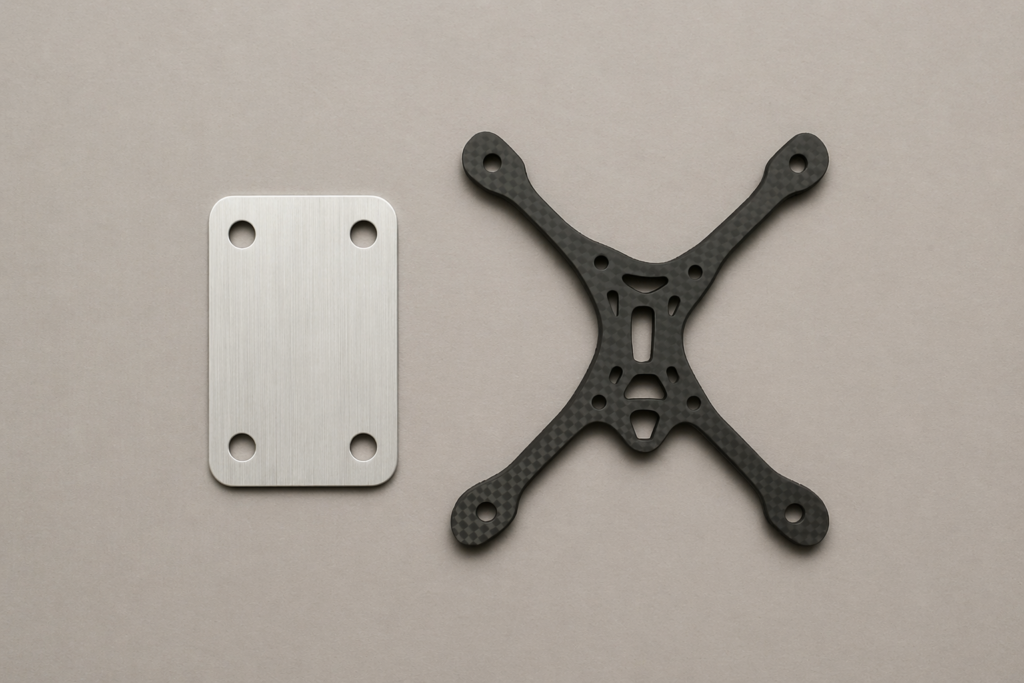
The material you choose also has a two-part effect on the price. First is the raw cost—specialty plastics or titanium are naturally more expensive than common aluminium. But more importantly, harder materials are tougher to cut. Machining stainless steel is like trying to carve a frozen steak versus soft butter; it takes longer and wears out the cutting tools faster, increasing that all-important machine time.
Finally, economies of scale play a huge role. The initial work of programming the machine and setting up the tools is a fixed cost, whether you’re making one part or one hundred. For a single prototype, that entire setup cost is applied to just one item. But when you order a larger batch, that cost gets spread out, dramatically lowering the price-per-part. This is why making 10 parts is rarely ten times the cost of making one.
Why ‘4 Weeks’ Doesn’t Mean 4 Weeks of Machining: A Breakdown of Your Lead Time
Just as cost has hidden factors, so does your project’s timeline. When you receive a 4-week lead time, the actual “machining” is often just a small fraction of that time. Think of it like ordering a custom-built piece of furniture; the total time isn’t just assembly, but also ordering the specific wood, preparing the workshop, and applying the final finish.
Your timeline is a sequence of essential, non-negotiable steps. A typical project breaks down like this:
- Engineering Review (1-3 days): An expert reviews your design for manufacturability and programs the CNC machine.
- Material Sourcing (2-7 days): The specific grade and size of metal or plastic is ordered and delivered to the shop.
- Machine Setup (1 day): A technician prepares the machine, tools, and fixtures required for your specific job.
- Machining (1-5 days): The actual cutting of your part. This is often the fastest stage!
- Finishing & Inspection (1-3 days): Includes final checks and any extra steps like smoothing edges or adding a protective coating.
Looking at this process, it’s clear why speeding up production for a “rush job” costs a premium—it means interrupting and re-prioritizing this entire, carefully planned workflow. Understanding these factors not only helps set realistic expectations but also reveals opportunities where smart design choices can make a real difference.
How to Lower Your Costs: 3 Simple Design Tips for Cheaper, Faster CNC Parts
The single biggest impact on your cost and lead time comes from your design itself. This is known as Design for Manufacturability (DFM)—the practice of designing a part to be easier for a machine to create. A simpler design almost always means less machine time and a lower price tag.
For instance, parts with straight lines are much faster to machine than those with complex, swooping curves. Think of the cutting tool moving along a straight highway versus navigating a winding mountain road—the highway is always quicker. If a beautiful curve isn’t absolutely essential for your part to function, opting for a straight edge is a simple way to save money.
Another key factor is precision, or tolerances. This is how much a measurement is allowed to vary. A loose tolerance is like saying, “this hole needs to be about a quarter-inch wide.” A tight tolerance is like saying, “it must be exactly 0.250 inches wide.” Achieving that extreme precision requires more time and careful inspection, which all add to the cost. Only demand it where it’s truly critical.
By simplifying your design and relaxing tolerances where possible, you make your part dramatically easier and cheaper to produce. These adjustments are the secret to controlling your budget and timeline.
Your 4-Step Checklist for Getting Your First CNC Machining Quote
The world of custom manufacturing no longer needs to feel like a locked room. You now know that a quote isn’t a random number, but a direct reflection of your design’s complexity, material, and quantity. You’ve traded uncertainty for a clear view of how a custom part goes from an idea to a real, physical object in your hands.
You’re now ready to get your first CNC machining quote. Use this simple checklist to confidently take the next step:
- Finalize Your 3D CAD Model: Ensure your file is in a universal format like a STEP file.
- Write a Short Project Description: Include your required quantity, material, and any special needs (like food-safe finishes).
- Find a Reliable Partner: Look for a shop that specializes in your specific industry needs.
- Submit & Communicate: Be ready to answer clarifying questions from the shop to ensure the best result.
Instead of seeing a price and a date, you now see a process. You’re not just requesting a part; you’re starting a conversation to bring your idea to life.
Ready to turn your design into a reality? At Swisstech, we specialize in high-quality volume production and food-packaging machinery components. Whether you’re local to Malaysia or looking for a global export partner, we’re here to help you navigate the process from blueprint to final part.