
For most food machinery, SUS304 is the practical default: it is corrosion resistant, widely available, hygienic when finished correctly, and usually easier to justify on cost. SUS316 is the stronger choice when the equipment faces chlorides, salt, acidic ingredients, aggressive cleaning chemicals, or frequent washdowns. This comparison explains how these stainless steel grades differ in food-contact environments, CNC machining, surface finish, hygiene, and selection criteria so you can choose the right material without over-specifying.
SUS304 and SUS316 Which stainless steel is better for food machinery?
SUS304 is better for general food machinery where corrosion exposure is moderate, while SUS316 is better for harsher food-processing environments that involve salt, brine, acidic products, or more demanding sanitation routines. Both stainless steel types are austenitic grades commonly used for food equipment, but SUS316 contains molybdenum, which improves resistance to pitting and crevice corrosion. The best choice is not simply the “higher” grade; it depends on the product being processed, cleaning method, operating environment, budget, and expected service life.
Use SUS304 when you need a reliable, food-friendly stainless steel for typical dry, wet, or mildly corrosive processing. Use SUS316 when corrosion risk is the main concern and premature surface damage would create hygiene, maintenance, or downtime problems.
Both SUS304 and SUS316 are widely used for food-contact applications. According to the Nickel Institute, Type 304 is the most commonly used stainless steel alloy in food and beverage applications, while Type 316L provides greater corrosion resistance.
Core differences between SUS304 and SUS316
SUS304 and SUS316 look similar, fabricate similarly, and both can support sanitary equipment design. The important difference is how they behave when the environment becomes more corrosive. SUS304 performs well in many food applications, but chloride exposure can lead to pitting over time, especially around welds, fasteners, seams, or stagnant liquid areas.
SUS316 adds molybdenum to improve corrosion resistance, especially against chlorides. That makes it a common choice for seafood processing, brine systems, salty sauces, acidic foods, chemical dosing areas, and equipment cleaned with more aggressive agents. However, that improved resistance usually comes with higher material cost and slightly more demanding machining behavior.
Key comparison points:
- Corrosion resistance: SUS316 generally offers better resistance in chloride-rich and acidic conditions; SUS304 is suitable for many standard food environments.
- Food-contact suitability: Both can be appropriate when designed, fabricated, polished, and cleaned correctly.
- Cost control: SUS304 is often preferred when the environment does not require SUS316-level corrosion resistance.
- Durability in harsh washdown: SUS316 is often safer where cleaning chemicals, moisture, and trapped residues create higher corrosion risk.
- Availability and fabrication: SUS304 is widely used and typically easy to source; SUS316 is also common but may increase material and processing cost.
Application fit for common food machinery
SUS304 is often chosen for frames, covers, guards, hoppers, conveyors, mixing parts, and general processing components where the food product is not highly corrosive. It is a sensible option for many bakery, dry food, beverage support, packaging, and general preparation systems. When the equipment is cleaned properly and designed to avoid residue traps, SUS304 can provide a long-lasting hygienic surface.
SUS316 becomes more attractive when the food itself or the cleaning process is aggressive. Salt, acids, fermented ingredients, dairy residues, seafood fluids, and chlorinated sanitation chemicals can all raise the risk of localized corrosion. In those cases, choosing SUS316 may reduce the chance of pitting, staining, and hard-to-clean surface defects.
A practical way to think about SUS304 and SUS316 stainless steel for food machinery is this: SUS304 is the economical workhorse, while SUS316 is the corrosion-resistant upgrade for demanding zones. Some equipment may even use both, with SUS316 reserved for direct product-contact parts or chemical exposure areas and SUS304 used for less exposed structural components.
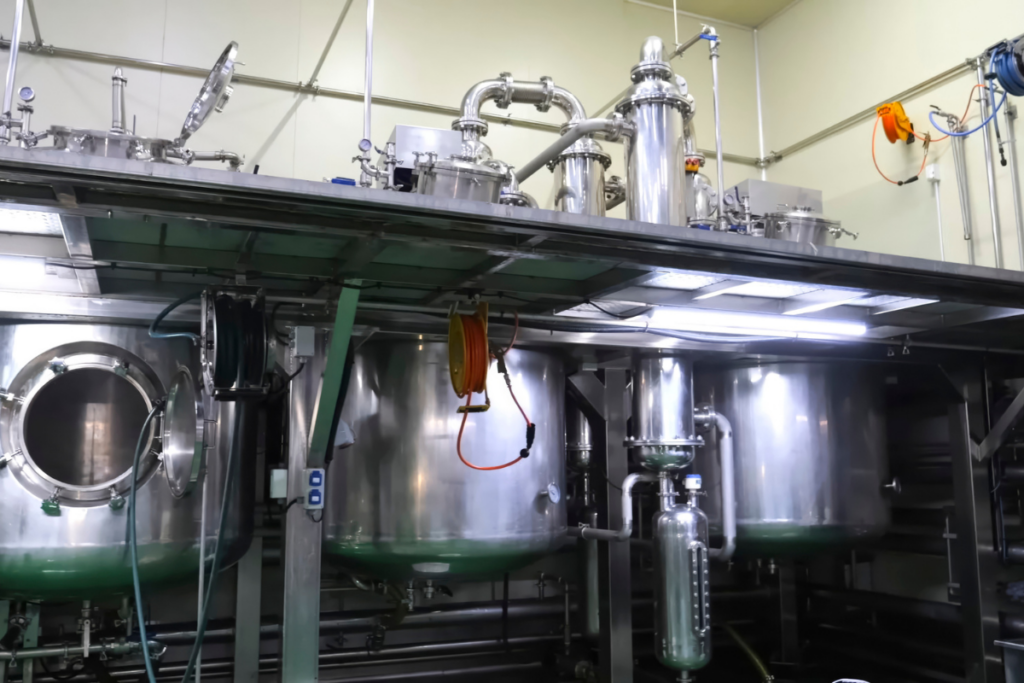
Which option is cheaper to run over time?
SUS304 is usually cheaper upfront, but SUS316 can be cheaper over the equipment’s service life if it prevents corrosion-related repairs, replacement parts, sanitation issues, or downtime. The lowest initial material cost is not always the lowest operating cost. For food machinery, surface integrity matters because corrosion pits and roughened areas can hold residues and make cleaning less reliable.
Consider SUS304 when:
- The food product is dry, neutral, or only mildly corrosive.
- Washdown is controlled and chemicals are not especially aggressive.
- Equipment can drain fully and does not have stagnant liquid zones.
- Budget is tight and corrosion risk is realistically low.
- Components are easy to inspect, clean, and replace if needed.
Consider SUS316 when:
- The process involves salt, brine, acidic ingredients, or high moisture.
- Cleaning uses stronger chemicals or frequent high-pressure washdowns.
- Parts have crevices, threaded areas, welds, or zones where liquid can sit.
- Surface damage would create a serious hygiene or maintenance concern.
- The component is difficult to access, expensive to replace, or critical to uptime.
CNC machining considerations for SUS304 and SUS316
CNC machining is an important part of the decision because food machinery often includes shafts, valves, fittings, nozzles, brackets, scrapers, rollers, and precision product-contact parts. Both SUS304 and SUS316 are machinable, but they require proper tooling, cutting parameters, coolant, and chip control. Austenitic stainless steels tend to work harden, so rubbing, light cuts, or dull tools can quickly make machining more difficult.
For SUS304, machining is generally manageable with sharp carbide tools, rigid setups, suitable feeds, and consistent coolant. It can still work harden, but many shops are familiar with its behavior, which helps with predictable production. For high-volume parts, SUS304 may offer a practical balance between corrosion resistance, machinability, and cost.
SUS316 can be more challenging because its alloy composition often makes it tougher and more prone to tool wear compared with SUS304. It may require more careful speed and feed selection, strong coolant delivery, and tooling suited for stainless steel. The benefit is that the finished part may better withstand harsh food-processing conditions, especially where corrosion resistance is more valuable than machining convenience.
CNC selection guidance:
- Choose SUS304 for general machined components where corrosion risk is moderate and production efficiency matters.
- Choose SUS316 for machined parts exposed to salt, acids, cleaning chemicals, or trapped moisture.
- Specify the finish early because polishing, deburring, and passivation needs can affect machining allowances.
- Avoid sharp internal corners where food residue and cleaning fluids can collect.
- Plan deburring carefully because burrs, scratches, and tool marks can undermine hygiene even when the alloy is correct.
Surface finish and hygiene matter as much as the grade SUS304 and SUS316
Choosing the right stainless steel grade does not guarantee hygienic equipment. Surface finish, weld quality, drainage, and cleanability are just as important. A rough SUS316 surface may be less sanitary than a well-finished SUS304 surface in a suitable environment because scratches, pits, crevices, and unpolished welds can trap food soils and microorganisms.
For both SUS304 and SUS316, product-contact surfaces should be smooth, accessible, and easy to clean. Welds should be properly finished, corners should be radiused where possible, and dead zones should be minimized. If the machinery requires frequent sanitation, the design should allow cleaning solutions to reach all contact areas and drain away fully.
Important hygiene considerations include:
- Surface roughness: Smoother finishes reduce places where residue can cling.
- Polishing direction: Consistent finishing helps cleaning and visual inspection.
- Passivation: Proper passivation can help restore and strengthen the protective chromium oxide layer after machining or welding.
- Crevice control: Even SUS316 can corrode if liquid, salt, or chemicals remain trapped.
- Maintenance access: Hygienic design should make inspection and cleaning practical, not just theoretically possible.
The FDA Food Code specifies that materials used for food-contact equipment should, under normal conditions, be durable, corrosion-resistant, nonabsorbent, smooth and easily cleanable.
Clear decision criteria for choosing SUS304 and SUS316
The best material choice comes from matching the stainless steel to the actual operating conditions. Start by reviewing what touches the part, how often it is cleaned, what chemicals are used, how long moisture remains on the surface, and how critical the component is to food safety and uptime.
Use this decision checklist:
- Identify the food chemistry. If salt, acid, fermentation, or chloride exposure is significant, move toward SUS316.
- Review the cleaning process. Stronger chemicals, longer contact time, and frequent washdown increase the case for SUS316.
- Check the equipment geometry. Crevices, threads, welds, and low-drainage areas need extra corrosion resistance and better finishing.
- Compare total cost, not only material cost. SUS304 may save money upfront; SUS316 may save money by reducing corrosion risk.
- Match the grade to each component. Not every part needs the same stainless steel. Use SUS316 where exposure is highest and SUS304 where conditions are less demanding.
- Specify finish and post-processing. Deburring, polishing, weld finishing, and passivation should be part of the material decision.
Final recommendation
For general food machinery, SUS304 is usually the best starting point because it balances corrosion resistance, availability, machinability, and cost. For harsher processing conditions, SUS316 is the better choice because its improved corrosion resistance can protect hygiene, durability, and long-term reliability.
In short, do not choose between stainless steel grades by name alone. Choose SUS304 when the environment is controlled and moderate. Choose SUS316 when chlorides, acids, aggressive cleaning, or moisture retention make corrosion a serious risk. The right stainless steel types, combined with sanitary design and proper surface finishing, will do far more for food machinery performance than material selection alone.
Choosing between SUS304 and SUS316 isn’t simply about selecting the more expensive material. The right choice depends on the food product, cleaning chemicals, operating environment, corrosion exposure and component requirements.
Swisstech provides precision CNC machining for SUS304 and SUS316, and other engineering materials for food machinery and industrial equipment. Send us your drawing, material specification and quantity for a machining quotation.