
Run your finger over your smartphone’s cool, matte metal case, then picture a shiny kitchen faucet. Though both are metal, their look and feel are worlds apart. This difference is a deliberate choice—surface finishes, the hidden story behind nearly every product you own.
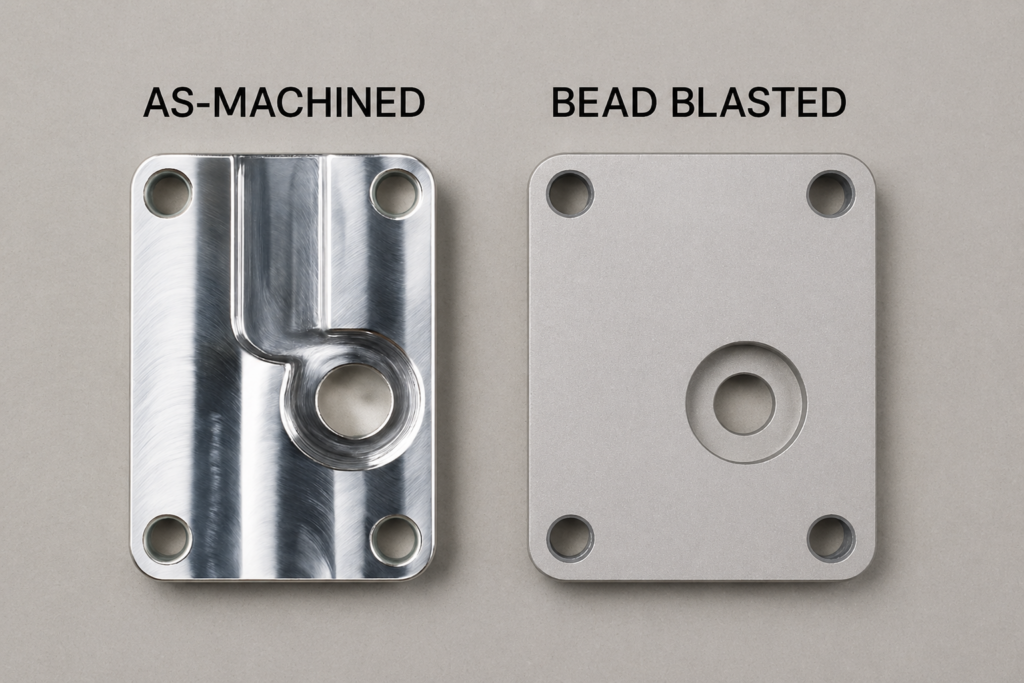
The story starts with the manufacturing process itself. Imagine a tiny, precise rake carving through metal—that’s essentially what a CNC machine’s cutting tool does. The faint lines and swirls it leaves are called tool marks, and this raw texture is known as the as-machined finish. It’s the default surface and the most economical way to produce a part, as it requires no extra steps.
While many designs focus on removing tool marks from machined parts, improving CNC machining quality can also mean perfecting this initial finish. You can often spot these subtle patterns on the bottom of a new metal cooking pot.
Beyond the Basics: Why Choose a Different Surface Finish?
While an “as-machined” finish is functional, it’s rarely the final step. A raw part might be strong, but its visible tool marks aren’t always desirable for a product like a tablet case. This is where post-processing comes in, modifying the surface for three key reasons: aesthetics, feel, and function.
A brilliant polish on a watch case is for looks, the soft matte texture of a laptop is for feel, and a smoother internal valve surface improves fluid flow for function. Each finish is a deliberate design choice, balancing appearance and performance against the cost of different CNC finishes to give a product its unique character and durability.
For a Modern Matte Look: The Power of Bead Blasting
Bead blasting is a popular method for creating a uniform, non-reflective surface. It’s less like sanding and more like spray-painting, but with microscopic glass beads instead of paint. A stream of these fine beads is propelled at the metal part, gently impacting the surface. This process doesn’t remove material; instead, it creates thousands of tiny, uniform dimples that blend away tool marks, leaving a perfectly consistent, non-reflective finish.
Beyond its clean aesthetic, this matte texture is excellent at hiding fingerprints and minor scuffs, making it a top choice for products that are handled frequently. The soft, frosted surface of a premium aluminum laptop or the casing of a high-end camera is often the result of bead blasting, giving it a durable and sophisticated feel.
To Get a Perfect Shine: How Polishing Creates a Mirror Finish
On the opposite end of the spectrum from a matte texture is the dazzling shine of a polished part. The process involves buffing the metal with progressively finer abrasive materials, methodically wearing down microscopic peaks until the surface is almost perfectly flat. When a surface is this smooth, it no longer scatters light—it reflects it directly, creating the illusion of a mirror.
This perfect smoothness is what separates a true polished finish from metal that is simply clean. You can see this stunning effect on luxury car rims, chrome bathroom fixtures, and high-end watch cases. Among the different types of surface finish in machining, polishing is chosen for pure visual impact and a feeling of premium quality.
This intensive, often multi-step process makes polishing one of the more expensive surface finish methods. But what if you need a finish that’s not just durable, but also adds vibrant color?
For Color and Protection: The Magic of Anodizing Aluminium
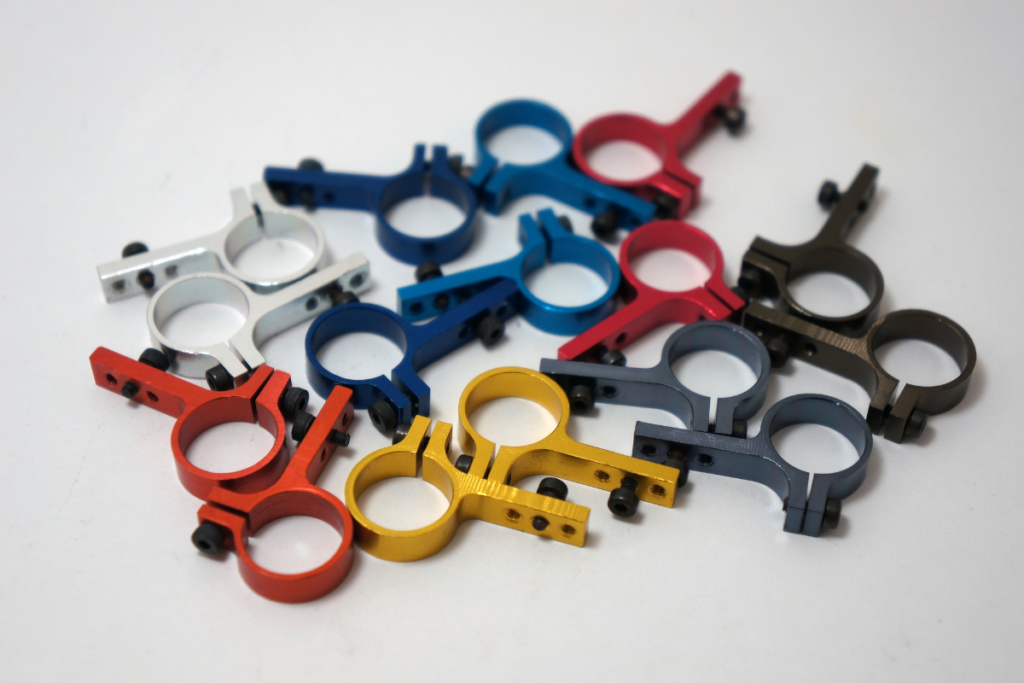
For aluminum parts, anodizing offers both a tough protective layer and vibrant color. Through an electrochemical process, the outer layer of the aluminum is converted into an extremely hard, durable, and corrosion-resistant shell. This new layer is also porous, creating a perfect canvas for adding dyes.
The crucial difference between anodizing and painting is that the color isn’t just sitting on top; it’s absorbed into this newly formed layer. Because the color becomes an integral part of the surface, an anodized finish won’t chip or flake like paint. This makes it one of the best surface finishes for aluminum parts that need to withstand wear and tear.
You’ve seen this finish everywhere, from the sleek colored casings of smartphones to the bright, scuff-resistant finish on outdoor gear like flashlights and carabiners. Anodizing gives designers a way to create products that are both beautiful and built to last.
How Smooth Is “Smooth”? A Quick Guide to Measuring Finishes
When designers specify a “smooth” finish, they rely on a number, not a guess. This is where Surface Roughness (Ra) comes in—a score for microscopic bumpiness. Imagine driving a tiny car over the metal’s surface: a low Ra value is a super-smooth highway, while a high Ra value is a bumpy gravel road.
This measurement is critical for function. A component inside an engine needs a very low Ra to slide with minimal friction. In contrast, a surface needing a strong grip might be designed with a higher Ra. By specifying this value, engineers guarantee the part will not only look right but also perform exactly as intended.
The Final Polish: A Finish Is a Choice, Not an Accident
Don’t leave your product’s final look and feel to chance. Whether you need a high-gloss aesthetic or a rugged industrial texture, our finishing experts are here to guide you through the selection process.
Consult with an expert to determine the ideal surface finish for your next project