
You’ve finalized your design and hit “order,” only to see a delivery estimate six weeks away. Why does a machine capable of cutting metal at lightning speed take over a month to ship a single bracket? In practice, the actual cutting—known as cycle time—might only take minutes, yet the CNC machining lead time often stretches into weeks.
Think of a machine shop like a busy professional kitchen. While it takes only fifteen minutes to grill a steak, you might wait an hour just to get a table. Similarly, the factors affecting CNC machining lead time extend far beyond the cutting tool itself. Uncovering hidden delays in the project queue, setup, and materials is the key to getting your parts faster.
Why Are CNC Machining Lead Time Taking So Long
Even if a highly advanced mill can cut your part in five minutes, the production lead time usually spans weeks because your order enters a crowded line behind existing contracts. Think of a busy restaurant kitchen: the chef doesn’t stop a massive dinner service to make a single custom sandwich immediately. Your project sits in the “Machine Queue” until a spindle opens up, which is often the primary reason why your part is still in the waiting room.
To maintain efficiency, shops often hold small orders to run them alongside larger, similar jobs. This practice, known as batching, reduces the wasted downtime required for:
- Material changeover
- Tool commonality
- Machine calibration
You can turn this logistics puzzle to your advantage by asking suppliers for their “open capacity” windows rather than demanding arbitrary dates. While reducing CNC machining bottlenecks involves smart scheduling, the physical substance of your part matters just as much. Picking the wrong material can instantly triple your wait time.
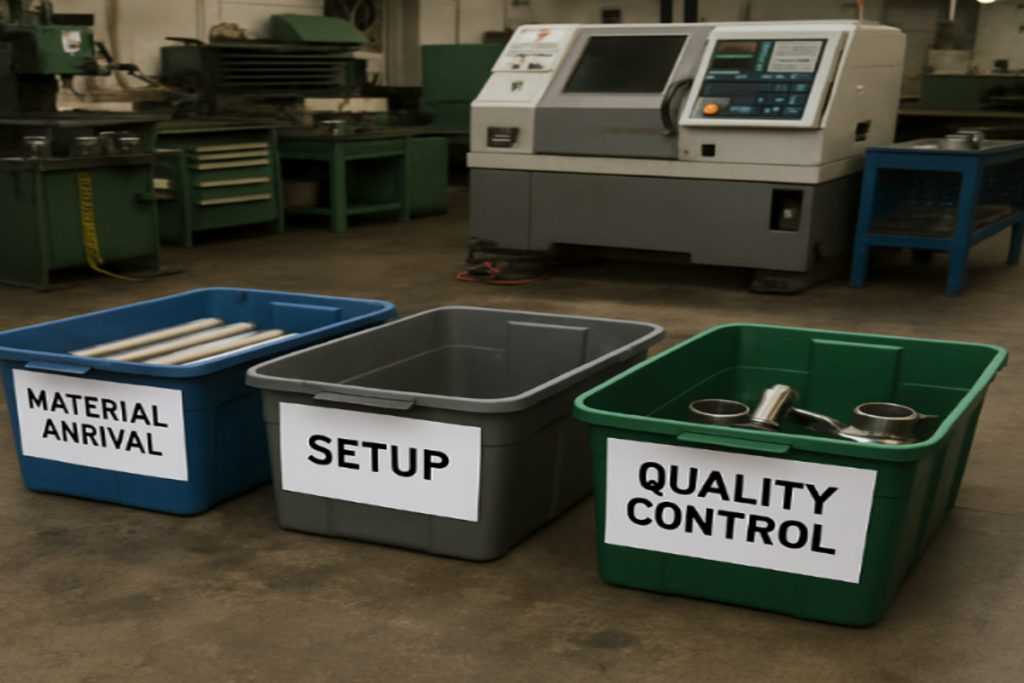
How Exotic Materials Can Triple CNC Machining Lead Time
Imagine a chef needing flour versus a rare truffle; one is in the pantry, while the other requires a special delivery. Shops keep “standard stock” like Aluminium 6061, allowing immediate production. Choosing a niche material however, introduces the impact of material availability on delivery, forcing the shop to pause your project while metal ships from a remote distributor.
Delays compound when suppliers enforce minimum order quantities, compelling the shop to buy a 12-foot bar for a 2-inch part. For specialized superalloys, the raw stock might originate internationally, exposing your timeline to domestic vs overseas CNC lead times. This logistical hurdle often adds a week of “dead time” before a tool even touches the workpiece.
Bypass these roadblocks by requesting a “house list” of in-stock materials; a standard grade often provides similar performance without the wait. Once the material is loaded, however, production speed depends on the precision you demand. Requesting a “perfect fit”—or tight tolerance—can grind the machine to a halt.
The High Cost of Complexity: How Tolerances Slow the Spindle
Demanding perfection on every surface is the most common reason for production bottlenecks. Think of how do tolerances affect production lead time like handwriting: scribbling a note takes seconds, but writing calligraphy requires slow, deliberate strokes. When you specify a tolerance of +/- 0.001 inches (0.025mm), the machinist must slow the feed rates and constantly stop to verify measurements, adding significant inspection overhead to the schedule.
Complexity also bloats the “invisible” preparation phase known as CAM programming. A human programmer must plot every movement the machine makes, and difficult geometry forces them to engineer complex workarounds. To unlock CNC setup time reduction techniques, avoid these specific features that drastically increase production lead time:
- Deep, narrow holes that require specialized long-reach drills.
- Thin walls that vibrate and chatter during cutting.
- Internal sharp corners that round tools physically cannot cut.
- Blanket +/- 0.001 tolerances on non-critical surfaces.
Most delays can be avoided by embracing design for manufacturability optimization early in the process. By loosening tolerances on aesthetic-only faces and using standard radii, you can shave 24 to 48 hours off the programming queue. Once the geometry is cut, cosmetic treatments can add days to the final stretch.
Finishing Touches That Finish Your Schedule
Your part might be fully cut, but requesting a specific coating starts an entirely new journey. Because most machine shops must ship components to specialist third-party vendors for treatments like anodizing or heat treating, this logistical detour automatically adds at least three to five business days for transit and processing. The raw speed of the CNC machine matters less here than the courier’s schedule.
Balancing aesthetics with deadlines is therefore a critical strategic choice. While a standard “as-machined” finish allows for immediate shipping, cosmetic requests like powder coating inject volatility into the timeline. Streamlining post-processing and finishing often means accepting minor tool marks on hidden internal components so that the visible external housing arrives on schedule.
Vendors also operate on batch schedules, meaning your urgent prototype might wait in a queue until there are enough parts to justify running a full tank line. Understanding these external cycles is one of the most effective ways to speed up CNC machining lead time.
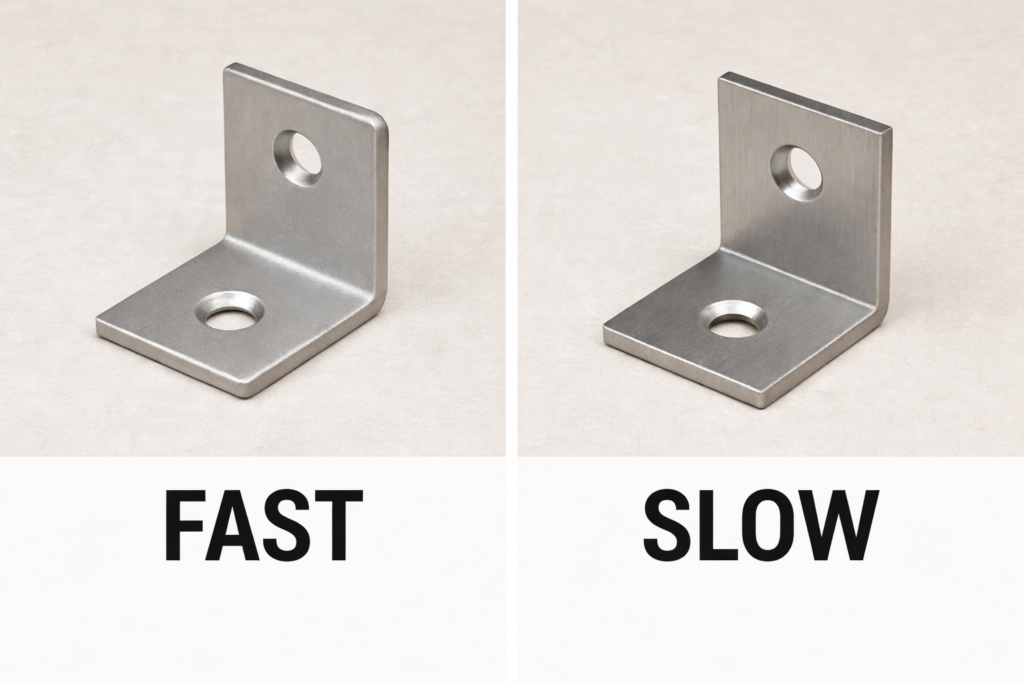
4 Practical Ways to Pull Your Ship Date Forward
Modern manufacturing platforms act like a spell-checker for your CAD files. Instead of waiting days for a manual engineering review, automated quoting engines analyze your 3D model instantly to highlight features that inflate lead times. This allows you to redesign complex areas before the order is even placed. Speed also comes from designing around standard inventory; selecting off-the-shelf material thicknesses prevents the shop from wasting hours machining raw blocks down to custom dimensions merely to start the job.
To consistently secure priority status in the production queue, treat the manufacturer as a collaborative partner by refining your input data:
- Use standard stock sizes: Avoid paying for material removal you don’t need.
- Loosen non-critical tolerances: Only demand high precision where parts interact.
- Provide clean STEP files: Universal formats prevent software translation errors.
- Skip non-essential finishing: Forego cosmetic treatments on hidden components.
These individual tactics create a cohesive logic for faster delivery.
From 6 Weeks to 6 Days: Your Faster CNC Action Plan
You are no longer at the mercy of a “mysterious” manufacturing quote. By looking past the CNC machining lead time and into the logistics of the shop floor, you now have the roadmap to navigate and defeat supply chain delays.
By applying these variables, you’ve transformed from a passive buyer into a strategic partner who gets parts delivered while the competition is still waiting on an email.
Not sure where the bottlenecks are in your design? Let our engineers review your files to identify “time-wasters” and suggest faster manufacturing alternatives.