
You’ve just unboxed the custom parts you waited weeks for, only to find… it’s wrong. The finish is rough, and it simply doesn’t fit. In practice, this problem often starts not with bad machinery, but with a misunderstanding. Sending a supplier a sketch is like giving a home builder a napkin drawing instead of an architectural blueprint—it leaves far too much open to costly interpretation, a common issue when resolving CNC machining suppliers communication problems.
That digital blueprint for a machine is a 3D CAD file, a specific computer model containing exact dimensions. But even with a perfect model, you must also communicate your “design intent.” For example, which surface needs to be perfectly smooth for appearance, and which hole must be an exact size to fit a specific screw? Without these notes, a supplier is forced to guess, and their interpretation of what’s important might not match yours.
To avoid this costly guesswork, your CNC machining suppliers audit process should start with one key question: “What file format do you need, and how can I best note the important features of my design?” Learning what to ask a potential CNC machining suppliers is the first step in ensuring the part you get is the part you envisioned, saving you time, money, and frustration.
The Quality Consistency Challenge: How to Avoid Parts That Don’t Fit or Meet Your Exact Standards By Your CNC Machining Suppliers
You’ve received your custom parts, but when you try to assemble your project, nothing fits. A hole is slightly too small, or a slot is just a bit too wide. This common frustration almost always comes down to a single, critical concept: tolerance.
So what is tolerance? Think of fitting a key into a lock. A little too big, and it won’t go in; a little too small, and it’ll feel wobbly and insecure. That “just right” amount of allowable wiggle room is the tolerance. Asking CNC machining suppliers for a very precise fit (a “tight tolerance”) requires them to work more slowly, use more advanced tools, and measure constantly. This is why a simple-looking part can become surprisingly expensive if it needs extreme precision.
Beyond just the right fit, how do you avoid parts that are scratched, made from the wrong material, or simply look unfinished? This is where a formal Quality Control (QC) process comes in. It’s a system for catching mistakes before the parts are boxed up and sent to you. A shop without a clear QC process is taking a gamble with your money and your project’s success.
To vet a supplier’s commitment to quality, ask them these simple questions:
- Do you have a dedicated person who inspects parts before shipping?
- What kind of measurement tools do you use to verify dimensions?
- What is your standard process for inspecting parts and verifying tolerances and materials?
A good supplier will have confident, straightforward answers. Hesitation or vague responses can be a major red flag that quality isn’t their top priority. Once you’re confident in a supplier’s quality, another major factor comes into play: their timeline.
The Lead Time Issues Trap: Why CNC Machining Suppliers Said “Two Weeks” But Often Turns Into Six
You get a quote with a two-week lead time, but six weeks later, you’re still waiting for your parts. This common and costly frustration happens when a supplier only quotes their “machining time” instead of their total “lead time.” The truth is, the hours a machine spends actively carving your part are just one piece of a much larger puzzle, and successfully managing CNC machining suppliers lead times requires seeing the whole picture.
Before a single chip of metal is cut, the shop must complete its prep work: ordering the right material, programming the machines, and preparing the tooling. This alone can take days. After machining, your part may need finishing steps like smoothing, anodizing, or inspection. A delay at any stage—like waiting for raw material to arrive—pushes back the entire schedule. This is especially true when comparing local vs overseas CNC machining services, where shipping and customs can add unpredictable weeks to a project.
To avoid this trap, ask more specific questions. Instead of just, “When will it be done?” try, “Does your lead time include material sourcing and shipping?” and, “What are the most common reasons for delays with a part like mine?” A supplier who can answer these confidently is more likely to be organized and transparent. If their answers are vague, it’s not just your schedule that’s at risk; these delays are often a warning sign of another looming problem: the price shock.
The Price Issues Shock: Uncovering the Hidden Costs Behind a “Cheap” Quote
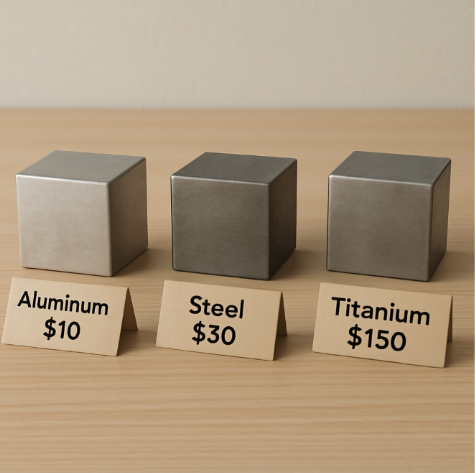
Receiving drastically different prices for the same part can be baffling. This price mystery almost always comes down to three key cost drivers: the material used, the time it takes to machine the part, and the quantity you order. The first factor is the most straightforward. Just as in construction, some materials are simply more expensive than others. A part made from lightweight, high-strength titanium will cost significantly more than an identical one made from standard aluminum, even before a machine is turned on.
Beyond the raw material, the biggest cost is machine time. A simple block with a few holes might only take minutes to make, while a complex, curved part requires hours of careful, computer-guided carving. This also highlights why specified CNC machining tolerances are so critical. Asking for extreme precision forces the machinist to slow down, use special tools, and measure constantly. An unusually low quote might signal a shop is planning to rush the job, which can result in a part that doesn’t fit or has a rough, unprofessional finish—one of the most common problems with CNC machine shops.
Ultimately, a quote that seems too good to be true probably is. It could mean the supplier is substituting a cheaper material, ignoring your specified tolerances, or skipping the crucial final inspection. Instead of just seeking the lowest price, look for the best value. A great supplier will explain their quote and may even suggest small design tweaks that could save you money without sacrificing quality. This transparency is a key indicator of a reliable partner, and knowing which questions to ask is your best defense against unexpected costs.
Your 5-Point Vetting Checklist Before You Place an Order
Armed with an understanding of what drives costs, you can now proactively screen for a reliable partner. Instead of just sending your design out for quotes, use this short vetting process to gauge a supplier’s professionalism and transparency. The goal is to find a shop that acts less like a simple order-taker and more like a skilled partner invested in your project’s success.
Before you commit to an order, ask these five questions to any potential CNC machining service:
- Can you review my design for manufacturability before quoting?
- This question checks if they’ll help you spot features that are expensive or difficult to make, potentially saving you money. A “green flag” is a yes; a “red flag” is a shop that just gives a price without any feedback.
- What is your standard process for quality inspection?
- You’re looking for a specific answer, not just “we check everything.” A good supplier will mention who does the checks (e.g., a dedicated inspector), what tools they use (e.g., calipers), and when it happens (e.g., after the first part and before shipping).
- Who will be my main point of contact?
- This reveals how they handle communication. Having a single, dedicated person—a project manager or lead engineer—prevents your questions from getting lost.
- Can you provide an example of a similar part you’ve made?
- While they can’t show confidential client work, a good shop can often provide photos of parts with similar complexity or materials, proving their capability.
- What are the most common causes of delays in your shop?
- This tests their honesty. A transparent partner will give a real answer, like “complex setups” or “material supplier delays,” and explain how they manage those risks. A vague or defensive answer is a warning sign.
The quality of their answers is more important than the answers themselves. A supplier who is open, detailed, and willing to collaborate is signaling that they are a true partner, not just another vendor. This upfront diligence is the single best way to avoid disappointment and ensure you get the perfect part on the first try.
From Idea to Perfect Part: Your Path to a Great CNC Partner
Where you once saw a confusing list of quotes, you now see a clear set of clues. The gap between a brilliant design and a perfect physical part no longer feels like a gamble. You’re equipped to look beyond the price tag, ask meaningful questions, and understand the story behind a supplier’s promises.
You’ve learned that the best way to solve supplier problems is to prevent them entirely. This proactive approach is built on the importance of supplier transparency in manufacturing. A good partner won’t hide their process; they’ll welcome your questions because they are confident in their quality and communication.
This knowledge is your new filter for making decisions. Whether you are weighing on-demand manufacturing vs traditional CNC suppliers or determining how to switch CNC machining suppliers for an existing project, the goal is the same: find the best value, not just the lowest cost. The right partner saves you from costly delays and remakes down the line.
You are no longer a passive customer hoping for the best; you are an informed client ready to build a successful partnership. For your next project, start by asking one simple question about a potential supplier’s quality control process. Their answer will give you the confidence you need to move forward, transforming your idea into a reality, exactly as you imagined it.
Not sure if your design is ready for machining? Contact us for a practical review of your design, materials, and production needs.